Brown Recluse Spider Bites & Pets: What You Need to Know
Spiders are often overlooked in pest discussions—but when it comes to pets, certain spider species demand attention. The brown recluse (Loxosceles spp.) is among the spiders whose bite can cause…
Spiders are often overlooked in pest discussions—but when it comes to pets, certain spider species demand attention. The brown recluse (Loxosceles spp.) is among the spiders whose bite can cause serious localized damage, and in rare cases, systemic illness. For pet owners, awareness, quick response, and safe prevention are essential.
This article draws on expert sources — including the Pest Control California article “Brown Recluse Spider Bites: Symptoms, Treatment, and Prevention” — to provide a pet-centered perspective. (See original: pestcontrolcalifornia.us)
Why Brown Recluse Bites Are Concerning for Pets
While many spiders are harmless, the brown recluse is different in that its venom can damage tissue. Some key points:
Not every bite leads to severe injury — many remain minor and heal with minimal intervention.
The venom contains enzymes (such as sphingomyelinase D) that promote vascular damage, inflammation, platelet activation, and possible necrosis (tissue death).
Pets, especially dogs, can suffer more complications because the bite might go unnoticed until it worsens.
Early detection and veterinary care can reduce risk of serious outcomes.
How a Brown Recluse Bite Appears (Pets & Humans)
Below is a general evolution of how a bite may present and change over time — note that not all bites go through every stage.
Timeframe
Possible Signs & Changes
0–2 hours
Often painless or minimal discomfort. Slight redness, itching, or minor swelling may appear.
2–8 hours
A blister (vesicle) may form; a “target” or bull’s-eye pattern can begin, with pale center and reddened ring.
1–3 days
The area may expand in redness, swelling, and pain. Discoloration (purple, blue) can develop.
3–7+ days
In more severe cases: necrosis (blackened tissue), ulcer formation, sloughing of dead tissue, and slow healing.
Systemic effects (rare)
Fever, lethargy, vomiting, hemolysis (red blood cell breakdown), organ dysfunction in extreme cases.
Because many skin conditions (e.g. bacterial infections) can mimic a recluse bite, diagnosis is often one of exclusion unless the spider is found. The Pest Control California article emphasizes careful monitoring and that not all bites escalate severely. pestcontrolcalifornia.us
Signs of a Brown Recluse Bite in Dogs (or Other Pets)
Pets may show somewhat different clues because they can’t describe symptoms. Here are signs that suggest the possibility of a recluse bite:
Sudden limping, favoring a limb, or reluctance to move that limb
Local swelling, redness, or a blistered lesion
A “bull’s-eye” pattern to the lesion (pale center, red ring)
Gradual darkening or ulceration of the skin around the bite
Systemic signals: fever, lethargy, loss of appetite, vomiting
In more serious cases: bleeding disorders, hematuria (blood in urine), or organ distress
When you see such signs, prompt veterinary evaluation is critical.
What to Do (First Aid & Veterinary Care)
Immediate Steps at Home
Stay calm and secure the pet. Keep them still to avoid spreading venom.
Clean the area gently. Use mild soap and water around the bite (not aggressively).
Cold compress. Apply a cool, damp cloth (not ice directly) to reduce swelling.
Photograph the lesion daily. This helps track progression (size, color, ulceration).
Avoid applying harsh home remedies. Don’t cut, squeeze, or apply strong chemicals.
Transport to vet if signs worsen.
Veterinary Diagnostics & Treatment
Vets may conduct blood work (CBC, clotting profile), urinalysis, and inspect lesion.
There is no commercial antivenom for brown recluse bites in pets.
Treatment usually is supportive: • Wound care (cleaning, dressing) • Pain relief and anti-inflammatory medication • Antibiotics if secondary infection is suspected • In severe cases, surgical debridement of necrotic tissue • Monitoring for systemic complications (kidney, liver, blood cell issues)
Healing time is variable — mild cases may resolve in weeks; deep lesions may take longer and may leave scars.
Complications After a Brown Recluse Spider Bite
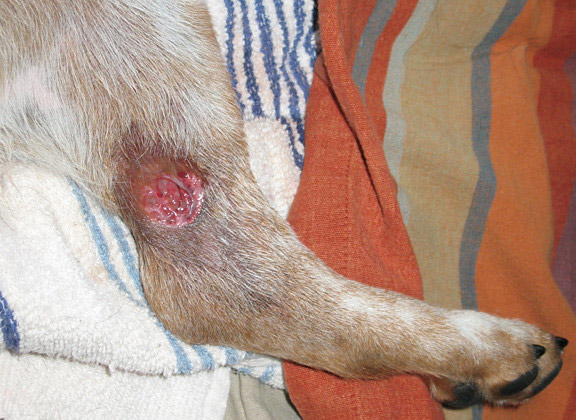
Below you can place two images (side by side or one above the other) showing brown recluse spider bite progression on a dog. These visual references help pet owners understand the severity and changes over time.
Day 5 progression
Same bite at day 8
Prevention: How to Protect Pets & Home
Because bites are unpredictable, prevention is your best defense.
Declutter and inspect hidden areas. Spiders hide in boxes, storage, wood piles, closets.
Seal entry points. Caulk cracks, install door sweeps or mesh screens, seal gaps around utilities.
Shake out bedding, towels, clothing. Before pets or humans use them.
Limit pet access to attics, basements, or storage areas where spiders may reside.
Use pet-safe pest control methods. Treat perimeters and cracks with low-toxicity, pet-safe options.
Monitor pet behavior. Unusual limping, licking of one spot, or changes in appetite may hint at unseen bites.
Why PetSafePestControl’s Approach Adds Value
At PetSafePestControl, your pet’s health is paramount. Our practices are designed around safety, not just pest removal:
We use pet-friendly, low-toxicity treatments that minimize risk to animals.
We inspect for spiders and their hiding zones during calls, not just for insects.
We work to exclude spiders structurally (sealing, screening) rather than relying solely on chemicals.
We educate owners on safe pet-pest coexistence and bite prevention.
In Summary
Brown recluse spider bites in pets are rare — but when they occur, they can escalate if unrecognized. The key is early detection, careful wound care, and prompt veterinary intervention. Visual documentation (images) helps monitor progression. Prevention through habitat management and pet-safe treatments reduces risk.